
On AI and Creativity
1 – The Anxiety of the Machine
Few topics in contemporary creative environments generate as much tension as artificial intelligence.
In classrooms, studios and online discourse, the same concerns resurface with obsessive regularity: copyright, authorship, dataset legitimacy, artistic ownership. AI is framed as a shortcut, a corruption of the creative act — a system capable of producing images without effort, without intention, without struggle.
Behind these reactions lies a deeper assumption, rarely made explicit.
That creativity once existed in a pure form.
Untouched by tools.
Unaffected by mediation.
It is an appealing idea: but almost certainly false.
Every artistic act in history has been mediated. The sculptor does not shape marble with bare hands. The painter does not transfer pigment directly from mind to surface. The architect does not build without geometry.
Between vision and form, there has always been a system.
A structure. A tool.
So the real question is not whether technology interferes with creativity.
The real question is:
At what point do we decide that mediation becomes unacceptable?
Where exactly should the line be drawn?
2 — The Line That Cannot Be Drawn
If artificial intelligence invalidates creativity, we must identify the precise moment where creativity ceases to be legitimate.
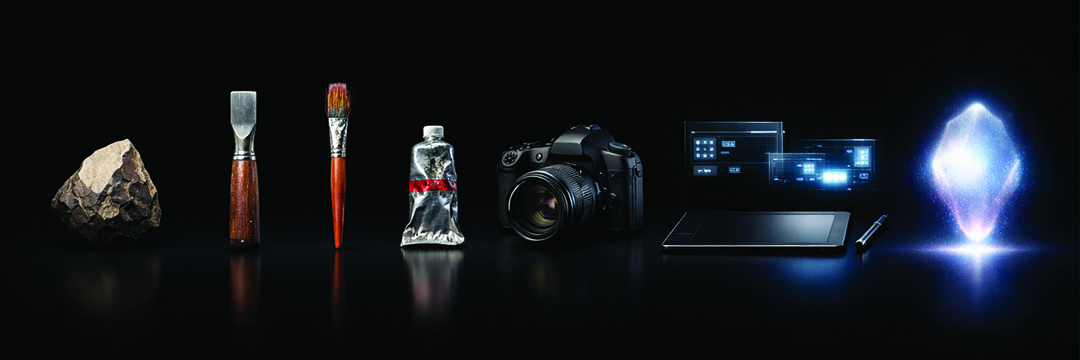
Does it end with the chisel?
The chisel is already a mechanical extension of the hand — increasing force, precision, and control.
Does it end with the brush?
The brush translates gesture into a softened trace, distancing the body from the surface.
Does it end with the compass?
A perfect circle is something the human hand cannot produce unaided.
Does it end with perspective?
Renaissance perspective was not intuition. It was a system — a geometric protocol that translated space into measurable relations.
Does it end with photography?
When photography appeared, many believed painting had reached its limit. If reality could be captured mechanically, what purpose remained for the painter? And yet, painting did not disappear.
It changed.
The history of art does not show the death of creativity through technology. It shows something more unsettling.
Each technological shift reveals that what we believed to be essential to creativity was, in fact, negotiable.
The line we are trying to draw has never been stable.
Artificial intelligence does not introduce the problem: it exposes it.
3 — When Technology Liberated Painting
In 1841, a small industrial invention quietly altered the trajectory of art.
The collapsible metal paint tube.
Before its introduction, oil painting was bound to the studio. Pigments had to be mixed manually and stored carefully. Working outdoors was difficult, slow, often impractical. The studio was not only a tradition: It was a constraint.
The paint tube removed that constraint.
Suddenly, artists could carry color with them. They could move. They could respond to changing light, to atmosphere, to time itself. What followed was not a refinement of painting. It was a transformation.
Monet did not simply paint landscapes. He began to observe light as a phenomenon — unstable, shifting, impossible to fix.
Painting moved from representation to perception. A tool had changed not only what artists could do.
But what they could see.
Technology did not replace creativity.
It revealed a dimension of reality that had always been present, but never fully accessible.
4 — The Demon of Innovation
Every technological shift enters culture as a disturbance.
The printing press was accused of corrupting knowledge. Photography was accused of killing painting. Digital tools were accused of destroying craftsmanship. Artificial intelligence now occupies the same position.
The pattern is consistent: Innovation appears first as a threat.
Only later does it reveal itself as a transformation; what initially destabilizes practice often expands it.
The demon of innovation becomes the angel of wisdom.
But the real change is rarely in the tool itself, it is in the new forms of thought the tool makes possible.
5 — AI as Amplifier
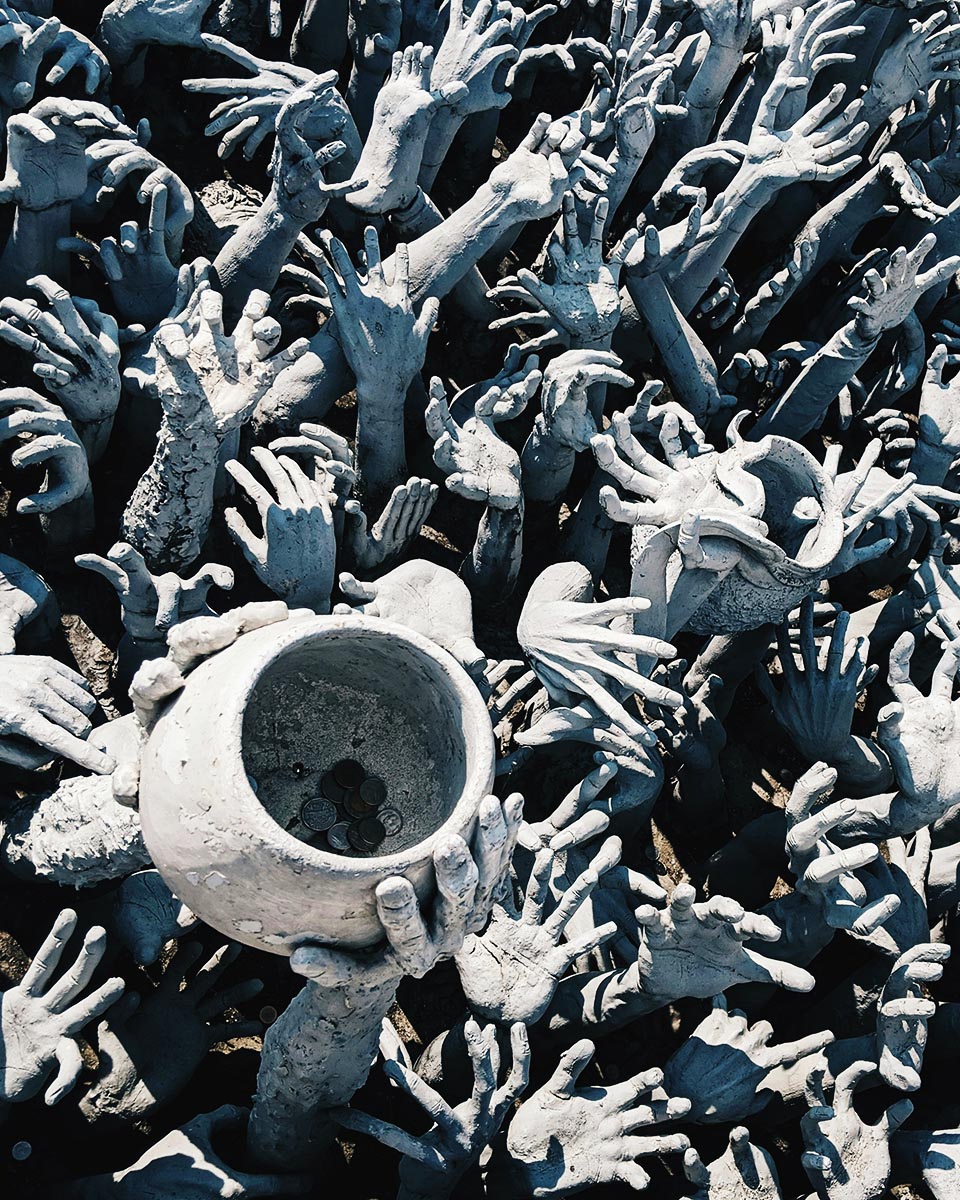
Artificial intelligence is often misunderstood as a generator.
A system that produces images automatically, without authorship.
Used superficially, this is true. It can generate endless streams of visually coherent outputs with minimal effort, but this is not where its significance lies.
Used intentionally, AI becomes an amplifier.
Consider a simple example:
An artist begins with a concept: beauty as ideological weapon. They collect references — classical sculpture, propaganda posters, architectural forms. They sketch loosely, not to define the final image, but to define its direction.
Then begins the interaction.
Through prompts, they explore dozens, sometimes hundreds of variations. Not searching for “the best image,” but for alignment. Most outputs are discarded. Some reveal unexpected structures. A few suggest something close to the original intention.
Those few are selected.
Then refined manually — composition adjusted, elements removed, typography introduced, balance corrected.
The final image is not the result of a single generation.
It is the result of continuous selection.
AI expands the field of possibility, but authorship emerges through restriction.
Not everything that can be generated should exist.
And in this shift, the role of the artist becomes more demanding, not less.
Henri Bergson and the disappearance of duration
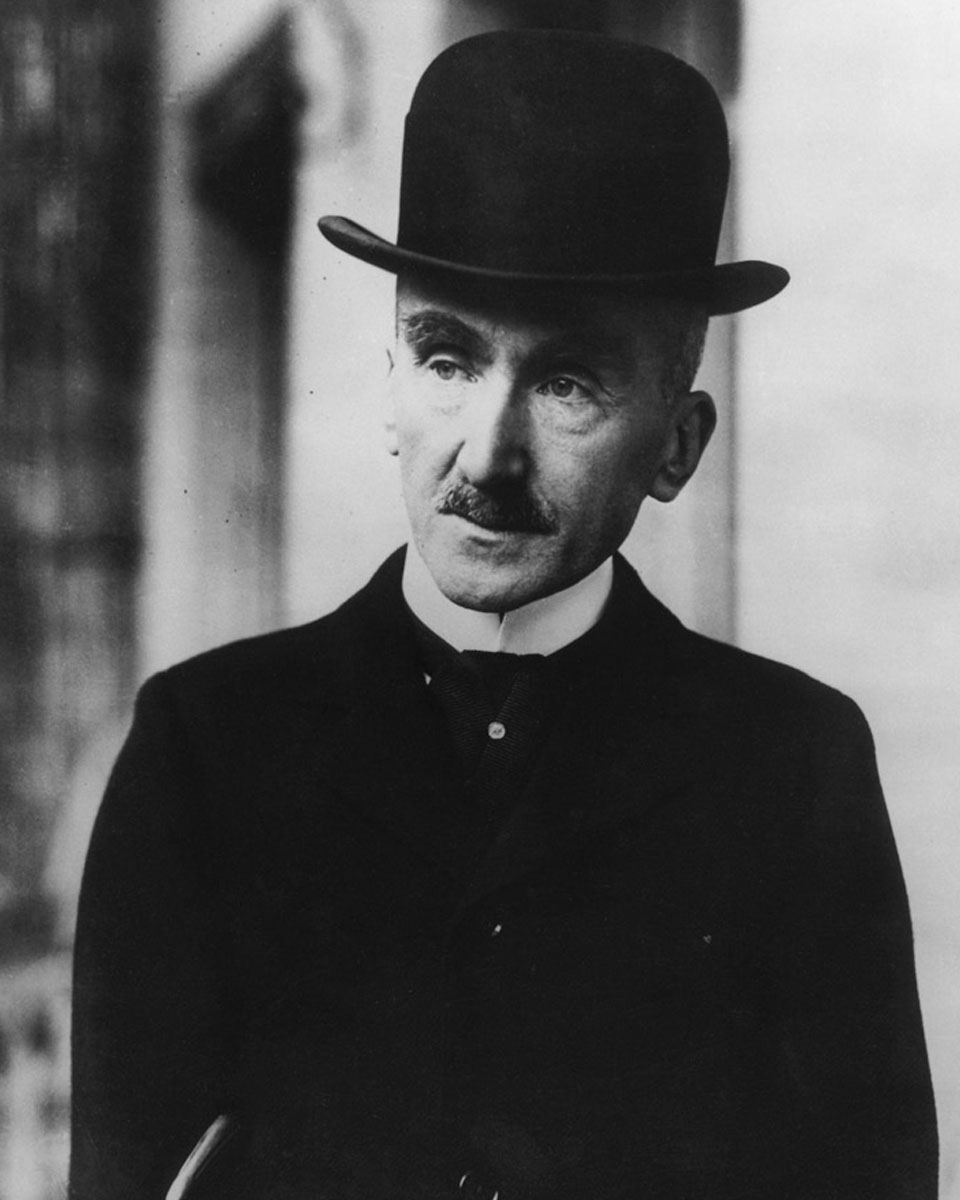
Long before artificial intelligence, Henri Bergson described consciousness not as a structure, but as a flow — a continuous duration in which past and present interpenetrate.
Any attempt to represent it inevitably distorts it.
Every image is a reduction. A freeze.
A simplification of something that was never static to begin with.
Artificial intelligence intervenes exactly at this fracture point.
By translating thought into immediate visual output, it compresses duration into discrete, selectable forms. What was once internal, ambiguous, and unfolding becomes external, fixed, and iterable.
The shift is subtle, but decisive. Imagination begins to change its nature, it is no longer something lived over time.
It becomes something navigated in space.
In other words, we are not just accelerating imagination. We are restructuring it.
6 — What Creativity Actually Is
The debate around artificial intelligence often fails because it misidentifies creativity itself.
Creativity is not the ability to generate images. It is the ability to recognize, protect and faithfully translate a vision.
This distinction becomes critical in the presence of AI.
Because AI does not hesitate.
It does not doubt.
It does not resist.
It produces, and it produces well.
This is precisely where the danger lies.
The outputs are often balanced, coherent, aesthetically convincing. They appear resolved, even when the underlying idea is not.
An artist may begin with a harsh, uncomfortable concept — something rigid, brutal, unresolved. But after dozens of iterations, the system begins to propose alternatives: softer lighting, more harmonious composition, more “pleasing” forms.
At some point, the image improves.
But the idea weakens: This is the moment where creativity is tested.
Not in the act of generating. But in the act of refusing.
The artist is no longer struggling against limitation, They are struggling against seduction, the ease of arriving at something that works – But was never intended. In this context, creativity becomes an ethical discipline.
The artist’s task is not to create from nothing: it is to resist what should not be created.
Artificial intelligence does not eliminate creativity, It exposes its true nature.
Not production, but selection, discipline, and fidelity to an internal structure that cannot be delegated.
7 — From Paint Tubes to Machine Minds
The invention of paint tubes allowed artists to step outside and encounter the world.
Artificial intelligence may suggest a different movement.
Inward.
We are already seeing early signs of this shift. Text-to-image systems reduce the distance between language and visual form. Image-to-image systems compress transformation into seconds. Experimental research in neural decoding has begun to reconstruct visual patterns from brain activity.
These are not isolated developments, they point in a direction.
A progressive compression of the distance between thought and image: if this trajectory continues, the implications are profound… for centuries, artists have worked through layers of translation — idea, gesture, tool, material, image.
But what happens when these layers collapse? When imagination becomes directly visible?
At first glance, this appears to be the purest form of expression. But purity is not clarity.
The mind is not structured like a finished composition. It is unstable, layered, often contradictory.
If thought can be externalized instantly, the role of the artist does not disappear. It intensifies.
Because expression without mediation is not automatically meaningful.
The challenge is no longer to produce images, but to understand what is worth revealing.
When paint tubes were invented, artists discovered a new way to “see” light.
Artificial intelligence may lead us somewhere else.
Not toward the world.
But toward ourselves.
Marshall McLuhan and the medium that thinks with you
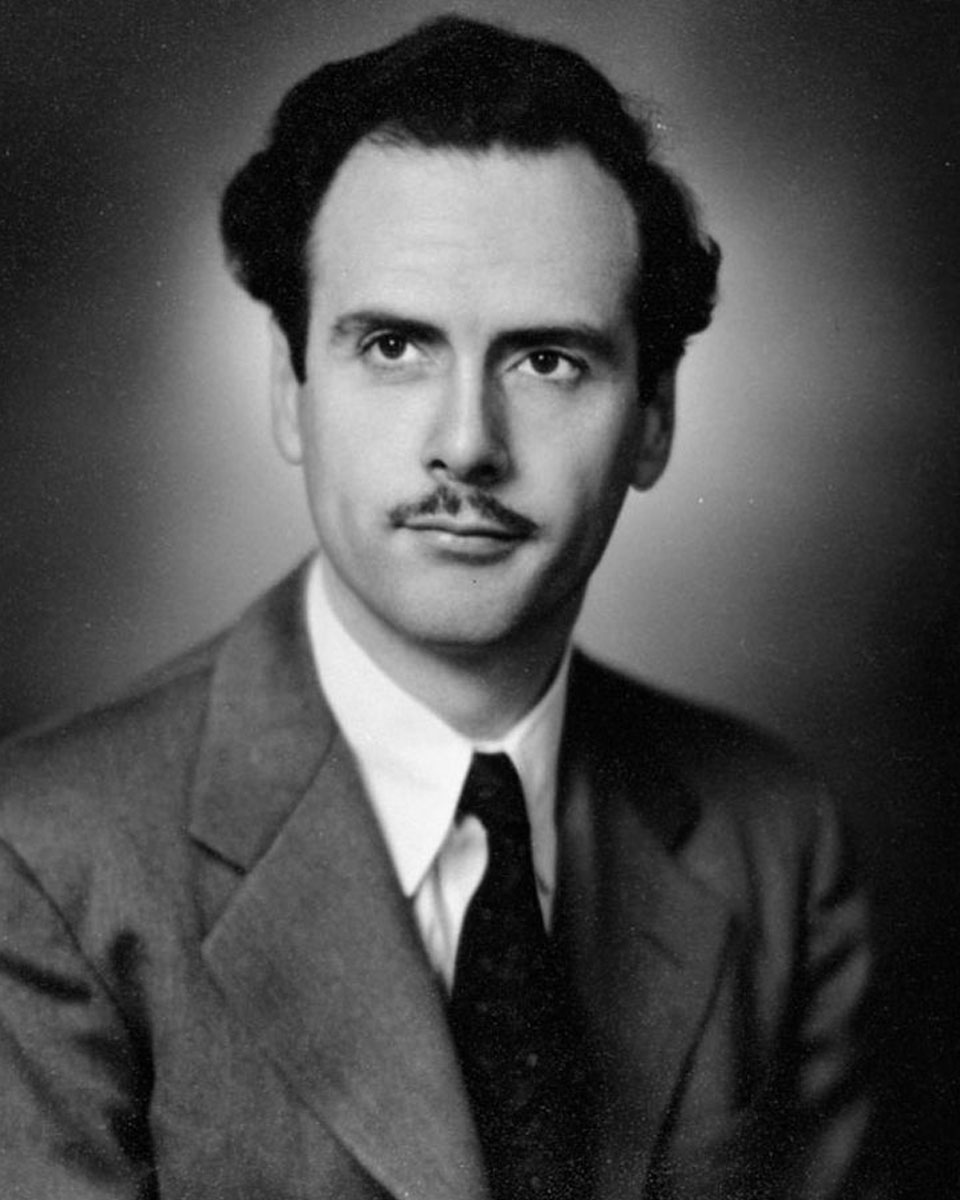
Marshall McLuhan famously argued that “the medium is the message.”
Not because content is irrelevant — but because every medium reshapes the structure of experience itself.
Print produced linear thought.
Television introduced simultaneity.
The internet created networks.
Artificial intelligence introduces something else entirely. For the first time, the medium does not simply transmit or organize ideas.
It participates in their formation.
It does not extend the senses. It externalizes cognition.
This is the real rupture.
If AI becomes the dominant creative medium, it will not simply change what we create — it will change how ideas emerge, how they are recognized, and how they are claimed.
In other words, we are no longer using a tool. We are thinking alongside a system that reshapes thought itself.
8 — A Note on Tools, Authorship, and Responsibility
Artificial intelligence introduces a difference that should not be ignored.
Traditional tools execute intention, AI systems can propose alternatives.
They generate variations that the artist did not explicitly conceive.
This does not invalidate their use, But it changes the nature of authorship.
The artist is no longer the sole origin of form: They become a selector within a field of possibilities.
This makes responsibility more complex.
Questions around datasets, authorship and copyright remain open and actively debated.
Most contemporary tools provide commercial usage rights for generated images, but ethical considerations extend beyond legal frameworks.
This article does not attempt to resolve those debates.
But it does assert something more immediate.
Regardless of the tool, the responsibility for the final image remains human.
9 — Why This Matters
In a landscape saturated with images, the difference between creation and generation becomes critical.
This is not a theoretical concern. It is a curatorial one.
We never encounter images in isolation; we encounter them within systems of selection — platforms, collections, archives — shaped by choices that remain mostly invisible, yet decisive: what is shown and what is not, what is refined and what is discarded, what is allowed to exist at all.
In this context, the value of an image is no longer defined by how it was produced, but by whether it carries intention — whether it resists collapsing into decoration, whether it remains anchored to something that cannot be easily optimized, replicated, or absorbed into the endless flow.
This is the only line that can still be drawn; not between tools, but between intention and its absence.
10 — The Question That Remains
When the paint tube was invented, no one predicted monet.
No one imagined that a small industrial object would redefine how humans perceive light.
Artificial intelligence may represent a similar threshold.
We do not yet know what it will reveal.
It may allow us to visualize complexity beyond intuition.
It may externalize thought itself.
It may expose patterns we have never seen.
Or it may simply produce noise at scale, the outcome is not determined by the tool.
It is determined by how we use it.
The real danger of artificial intelligence is not that machines will create, but it is that humans will stop thinking.
Because creativity has never been defined by the absence of tools, it has always been defined by the presence of intention.
And intention cannot be automated.
Final Note
This is not a rejection of technology.
It is an invitation.
To use it with discipline.
To question it without fear.
And to remain responsible for what we choose to bring into existence.