
Taste is subjective, Beauty is not
Introduction — A Difficult Thesis
For years I have found myself defending a position that often sounds provocative in contemporary discussions about art:
“Taste is subjective, beauty is not.”
This argument almost always meets resistance, especially when discussed with people whose education and professional life are rooted almost exclusively in the world of technique.
In a technocratic culture, beauty is often perceived as a luxury — something decorative, secondary, perhaps even frivolous. Functionality, efficiency and technical performance dominate the conversation.
The only legitimate question seems to be:
does it work?
Within this framework, aesthetic judgment appears almost suspicious. Beauty becomes subjective preference, a matter of personal taste, irrelevant to serious discourse.
Yet this assumption collapses the moment we examine more carefully what beauty actually is, how humans perceive it, and why certain forms and environments consistently attract us across cultures and across time.
1 — The Problem
Beauty reduced to opinion
In contemporary discourse the statement “beauty is subjective” is repeated almost as a cultural reflex.
The phrase functions as a conversation stopper: if beauty is purely subjective, then there is no reason to discuss it seriously. No criteria can exist, no analysis is necessary, and aesthetic debate becomes pointless.
But this position confuses two very different concepts:
taste and beauty.
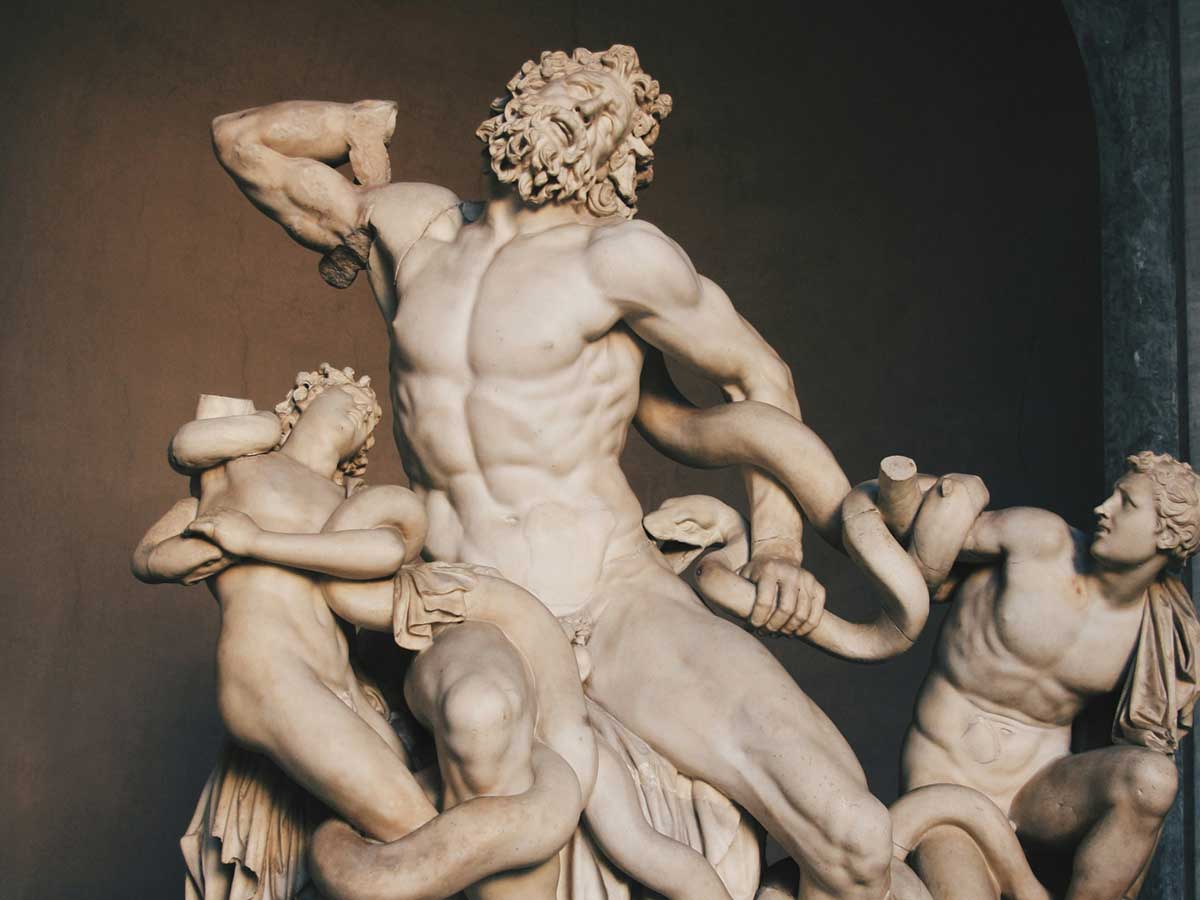
Taste refers to personal preference.
Beauty refers to qualities that provoke consistent aesthetic responses among human beings.
When these two concepts are collapsed into one, aesthetic discourse disappears.
2 — The Misunderstanding
Taste is subjective
Taste truly is subjective.
Individuals prefer different styles, different atmospheres, different artistic languages. One may prefer baroque exuberance, another minimalist clarity.
But this variation occurs within a much deeper framework of shared human perception.
Taste can also be cultivated.
The history of art, architecture and music demonstrates that aesthetic judgment evolves through exposure, education and cultural understanding. What we call good taste is not merely personal instinct, but a form of refined perception.
Without this refinement, taste remains purely instinctual.
It reacts to novelty, stimulation or familiarity, but it cannot evaluate deeper qualities such as harmony, proportion, symbolic meaning or craftsmanship.
In that sense, taste without aesthetic education can easily become bad taste — not because preferences differ, but because the capacity to recognize aesthetic qualities has not yet developed.
Taste should guide us through different forms of beauty, not abolish the concept of beauty itself.
3 — Evolutionary Foundations
Why humans respond to beauty
If beauty were entirely subjective, we would expect aesthetic preferences to vary randomly across individuals.
But empirical evidence suggests something very different.
Across cultures and societies, humans tend to respond positively to similar visual patterns and environmental qualities.
Research in evolutionary aesthetics and environmental psychology has shown that humans consistently prefer environments containing:
-
symmetry
-
fractal patterns
-
organized complexity
-
natural elements
-
curvature
-
visible craftsmanship
These features are deeply connected to the concept of biophilia — the innate human affinity for patterns found in nature.
Our brains evolved long before cities or architecture existed. For hundreds of thousands of years human survival depended on recognizing environmental signals related to safety, fertility and resource abundance.
Philosopher Denis Dutton described beauty as “nature’s way of acting at a distance.”
Certain visual qualities attract us because they historically signaled beneficial environments.
Symmetry suggests health and stability.
Fractal patterns mirror natural vegetation structures.
Balanced complexity stimulates cognitive engagement without overwhelming perception.
In this sense, beauty is not arbitrary.
It reflects the deep interaction between human cognition and environmental structure.
Beauty in the Built Environment
These principles also appear clearly in architecture and urban design.
Why do millions of people travel across the world to visit cities such as Rome, Paris or Barcelona? (or Turin…!)
Why are certain buildings constantly photographed while others are ignored?
The answer cannot simply be familiarity.
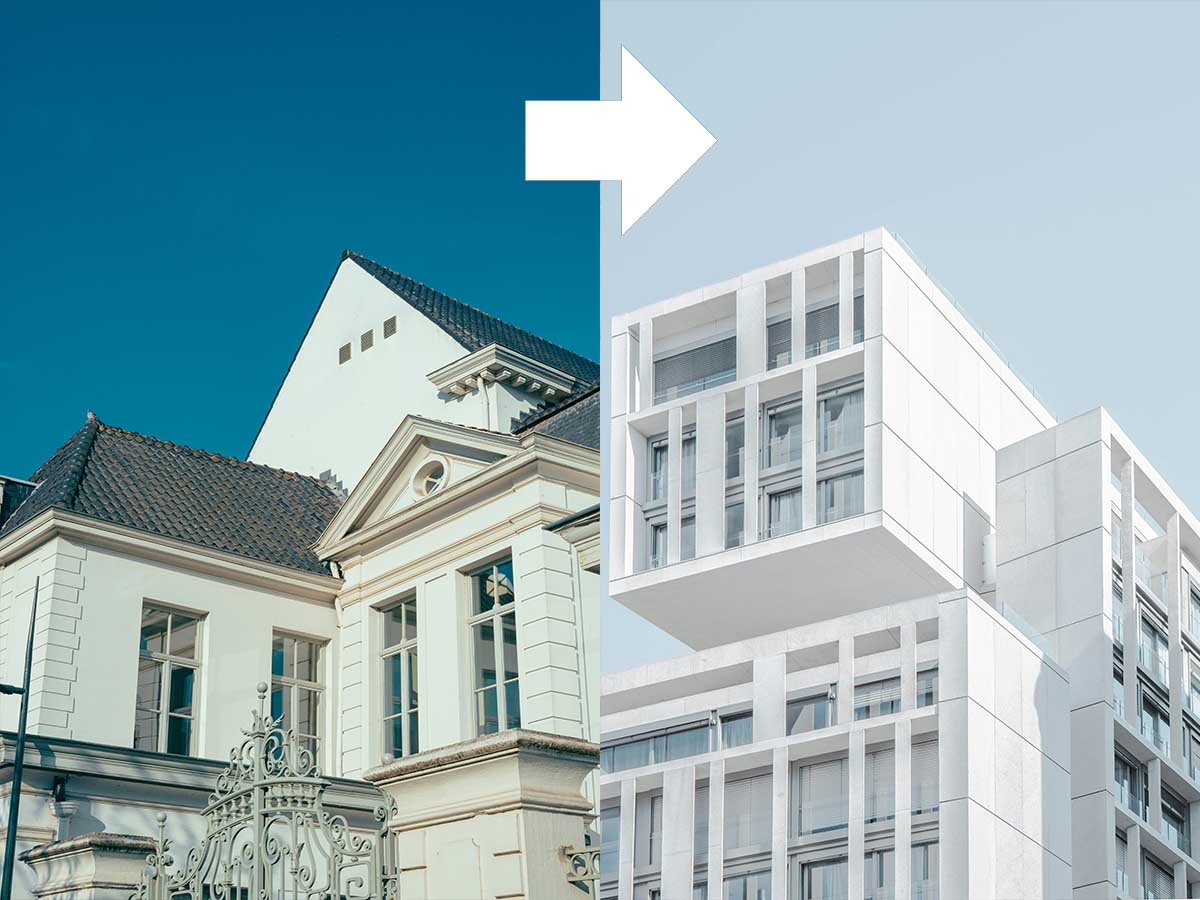
If popularity alone explained aesthetic attraction, people would flock equally to anonymous office parks, highway overpasses or monotonous housing blocks. They do not.
Instead, visitors consistently gravitate toward places that contain aesthetic qualities humans intuitively respond to: proportion, detail, ornament, natural integration and spatial harmony.
Studies have even shown measurable correlations between the perceived beauty of environments and indicators such as well-being, satisfaction and health among inhabitants.
Beauty is therefore not a decorative luxury.
It directly influences human experience.
4 — Taste and Culture
The education of perception
If humans share certain aesthetic predispositions, why do aesthetic judgments still vary so widely?
Because perception is shaped by culture.
Education, exposure and intellectual frameworks influence how individuals interpret aesthetic signals.
Roger Scruton argued that beauty involves a judgment of taste — a form of evaluation that can be learned and refined.
This process is visible in many disciplines. Architecture students, for example, often develop aesthetic preferences different from those of the general public after years of theoretical training.
But here a curious phenomenon emerges.
Studies have shown that architecture students sometimes begin to prefer buildings that the general public consistently finds unattractive. This phenomenon, sometimes called the design disconnect, reveals a tension between professional aesthetic ideology and the deeper perceptual responses shared by most people.
The existence of taste does not eliminate beauty.
It simply mediates our relationship with it.
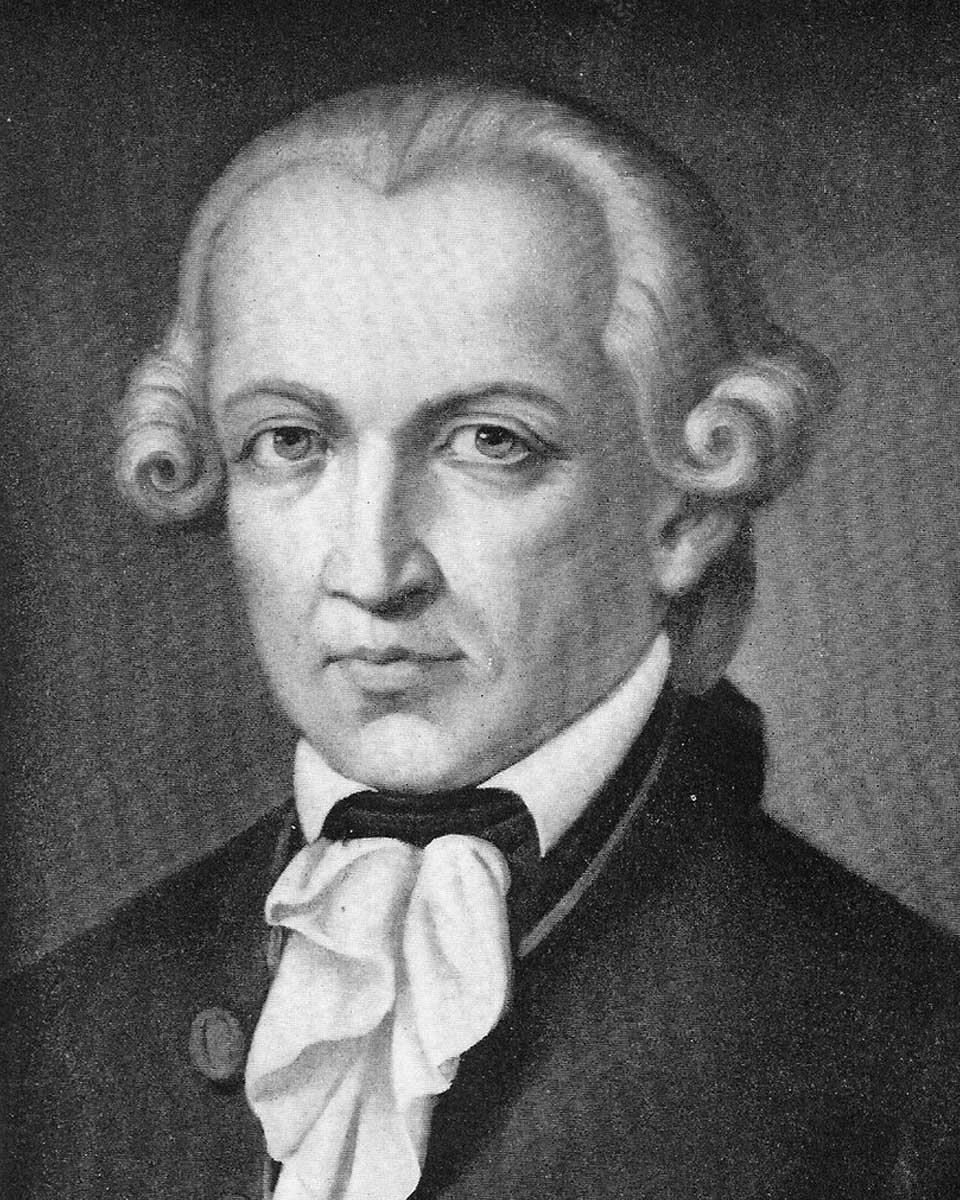
Immanuel Kant and the strange universality of taste
Long before contemporary debates about subjective taste, the philosopher Immanuel Kant confronted the same paradox in his Critique of Judgment (1790).
Kant argued that judgments of beauty are not objective in the scientific sense — they are rooted in a subjective feeling of pleasure. Yet, when we say that something is beautiful, we do not speak as if we were merely reporting a personal preference. We speak as if others ought to agree.
For Kant, this strange feature reveals something important: aesthetic judgment is subjective in origin, but it carries a claim to universality grounded in the shared structure of human perception. Beauty is not a measurable property of objects, but neither is it a purely private opinion. It arises from the common faculties through which human beings experience the world.
In other words, when we argue about beauty, we are not merely comparing preferences. We are appealing—often implicitly—to a shared human sensibility.
5 — The Modern Collapse
When functionality replaces meaning
The deeper issue may lie in a much broader transformation of modern society.
Since the Industrial Revolution, human culture has increasingly organized itself around technical efficiency.
Questions that once structured philosophical and artistic reflection gradually disappeared.
Instead of asking:
-
Is it true?
-
Is it just?
-
Is it beautiful?
modern societies increasingly ask only: does it work?
Philosopher Martin Heidegger described this transformation with remarkable clarity.
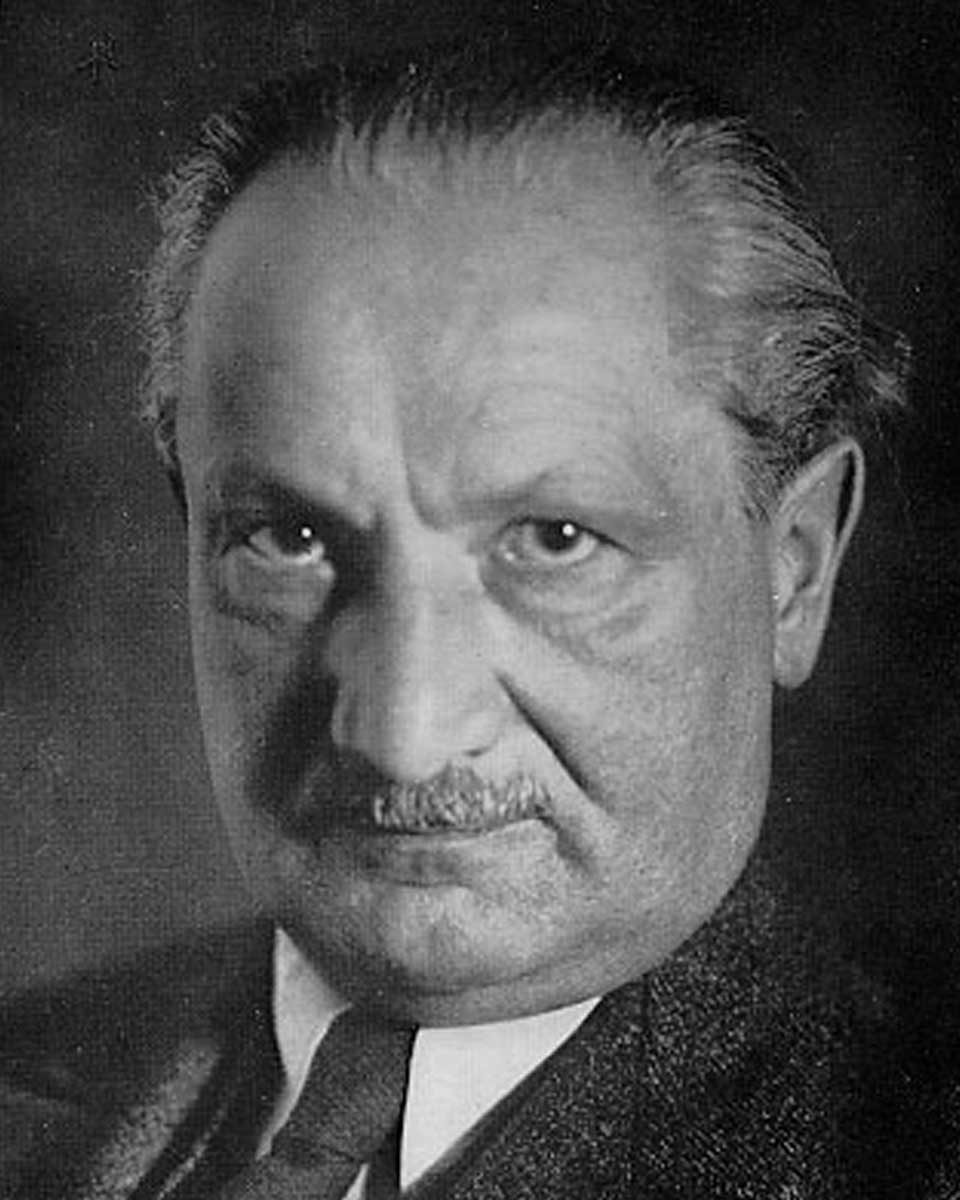
Heidegger and the Technical World
Heidegger observed that modern humanity increasingly relates to the world through what he called Zuhandenheit — the mode of manipulability.
Objects are no longer encountered primarily as meaningful presences but as instruments to be used, optimized and controlled.
Technology, in this sense, is not merely a collection of machines. It is a way of revealing the world.
As Heidegger wrote, technology is indeed a form of unconcealment — a way in which nature reveals its potentials. Yet this process contains a profound ambivalence.
In technological systems, humans risk becoming functionaries of the apparatus itself.
The danger is not simply that the world becomes technical. The deeper danger is that technical thinking becomes the only available form of thought.
Heidegger called this calculative thinking — a mode of thought that constantly measures, evaluates and optimizes.
It asks about efficiency, advantage and output.
But it rarely asks about meaning.
When calculative thinking dominates, alternative forms of reflection begin to disappear.
Beauty, poetry and contemplation are tolerated only as ornaments of the technical apparatus, not as genuine alternatives to it.
6 – The Consequence
In such a world, aesthetic judgment slowly loses legitimacy.
Beauty becomes a decorative afterthought — something optional, subjective, perhaps even embarrassing.
The built environment reflects this shift.
Cities increasingly fill with structures designed purely according to economic and technical parameters: efficiency, cost reduction, maximized floor area, optimized circulation.
But the human mind did not evolve to inhabit purely functional environments.
When aesthetic considerations disappear, the environment gradually becomes psychologically impoverished.
7 — Closing Idea
Beauty as a cognitive compass
Beauty is not a luxury reserved for artists.
It is one of the ways human beings orient themselves in the world.
Our perception of beauty reflects deep cognitive and biological structures that guide attention, preference and emotional response.
Taste may differ from person to person.
But the existence of taste does not eliminate the existence of beauty.
When societies abandon the question of beauty entirely, they risk creating environments that function efficiently while slowly eroding the quality of human experience.
A civilization that stops asking whether things are beautiful may eventually stop asking whether they are meaningful at all.
I started writing down one thing at the end of every day — what I actually managed to do. Not a to-do list, not plans. Just one small win. It’s surprising how quickly it shifts your perspective.
hello. Although i mostly agree with the argument, i find myself stimulated into delving a bit deeper into the matter…. from my point of view, of course. What we end up calling art, as an attempt to understand beauty, It is a spontaneous reaction to things toward which we have felt profound admiration and gratitude, and accordingly a desire to understand those feelings by creating a still image of it…. a reminder. And also in order to share it. It is in fact a natural impulse to desire to share something beautiful. Another characteristic of art is that does not have any practical purposes, For example, a beautifully executed vase, that although magnificent still serve as a vase, Beauty and therefore art, when it can escape various socioeconomic restraints, acts on a cognitive and emotional level, changing somewhat the atmosphere around it.
Everything in regard to art ( and for that matter science -the two main branches of human knowledge- ) stems from careful observation of nature…. therefore an attempt to capture its essence.
What we call beauty, is actually a complex game of balance that serves specific purposes, a precise function: when something works in nature, ( and in ourselves ) we recognize it as beautiful. And unless something has disturbed our cognitive development, we recognize it. Science furthermore pinpointed to various mathematical recurrences that inhabits this vast equilibrium we identify as beauty…. Unless it was cut, or struck by lightning or the human hand, a tree never has an ugly branch … why? Because it constructed itself in order to expose all the leaves to maximum light…. and much more, and it is by serving this specific purpose that it has become this magnificent form we stood to admire.
Then came photography so we had to move from simple depiction to the attempt to evoke the emotions we had while standing in front of it. But well before photography, the capacity of some to make art, was captured by the powerful, for propaganda reasons and to project a sense of importance and grandeur that they themselves did not possess. Predators may be fascinating, but surely do not create much: their strength is to identify valuable thing and go about taking them, using cruelty as the most effective scare tactic. in this contest, even the most sublime painting may become a mere decoration. Therefore, a lot of the art we have been exposed to, although often magnificently executed, do testify mostly to the power of the the client… at best, the artists hid some secret sign or symbol in protest, since for hundreds of years any sorts of divergence from the main narrative could have cost them their lives.
Beautiful may be the subjects and the execution, the colors and the composition…. as they all derive from observing and using nature bounty, but is this art really beautiful? In this case beauty seems to be quite subjective: it depends on the things that impress us the most, rather than the recognition of a universal quality of infinite equilibrium. Can art that has constrictions at its core be really beautiful? ( may be as a mean of escape… ).
These days art has become an industry an in order to work it had to render natural predispositions obsolete: enter technique! with technique and a vast array of materials at our disposition we could approach art like any other job, memorizing and copying, making ours what actually wasn’t, without often not even mentioning the fonts from which the work was derived.
The intelligence of the body set aside, now art speaks almost exclusively to the mind, therefore rendering necessary long explanation regarding the aim and the process, substantially saying this is art because. i say so. Because i followed the iter.
No discovery of any kind, just work. Point. Pushing beauty out of the equation as an unnecessary quality,
Every time commerce enters a realm, it slowly and securely lower its quality in order to maximize its profits.
The Arts are no different. Beauty, the main subject, erased. Same with science. Each one is given fragments to work on without a basic knowledge of the whole.
My take is that art ( like love ) cannot exist if not in freedom. and since beauty is a reflection of nature, we seek to subjugated in order to control it and exploit it, No effort was put forward to educate the public on matters of aesthetics and science alike. People had to work very hard and forget about contemplating a system much more liberating, interesting and immense than the few options that we’ve been forced into. To avoid a very dangerous consciousness growth among the population has always been a fundamental aspect to maintaining power.
So…. in this circumstances it is not amazing that most people confuses familiarity, memories, learned behavior and localized culture with beauty, because to recognize beauty you had to have had the time to experience it directly, Without any mediation: mind and body alike. Belonging to a group or a social strata did the rest. Belonging often imposes a certain amount of blindness and deafness…
The biggest hurdle to the incapacity to appreciate beauty, derives from a sensibility that need to freely develop in an environment that promotes our natural capacities….like a plant growing in fertile soil. A circumstance that the system tries its very best to make as rare and difficult as possible.
if we imagine sensibility like some sort of feel tendrils that allows us to merge with our surroundings, creating a cognitive and material ( chemistry ) connection accordingly to our perceptions, than an idea start taking place, depending on the intellectual tools on our disposition, perfectly tied with the clear emotions we first instinctively perceived.
It is easy to understand why most people cannot recognize beauty unless someone indicates it. Beauty is free, and available to all, as long as we have the opportunity to witness it. We are wired to recognize it.
Still, another distinction should be made: all that nature created, and all that we created to give credence to our desire for dominion. In order to do this, one must observe the object in question and within environment in which it exists: there are some “beautiful” things, perfectly executed that greatly disturb the environment surrounding them… so if seen within an artificial environment we are easily led to believe they are beautiful, impressed by the air of importance they exude due to the materials and the technique employed. Yet i do not recognize those things as beautiful anymore, Because one of the basic quality of beauty is the lack of stress imposed on the environment, and relatively its profound connection with it. This human centered faux beauty serves only as an elegy to the power of man, that hubris that wants to put us at the center of the universe…. an attitude we all grew up in, like fishes in a bowl, mistaking arithmetic with mathematics.
We are fully in a technical world, seeking to control it all, and yet, it is clear that our dominion over the microscopic and the macroscopic immensity is but an illusion, and that this fantastic language of equilibrium, determined by zillions and zillions of specific electromagnetic frequencies still eludes us.
Taste is our personal history, Beauty is the start that encompasses all other notions, since it resumes it all within proportions we can understand and aspire to, as long as we are exposed to it. For now, too many filters are imposed between us and Beauty….too many options, too many choices. I’m afraid certain understandings are difficult to achieve within the excesses and the chaos we are creating…. so Beauty eludes many of us. And yet, we are still surrounded by it. At least here, without the ravages of war at the door.